

Where Can You Go?
The Paradox of Public Toilets in Buenos Aires
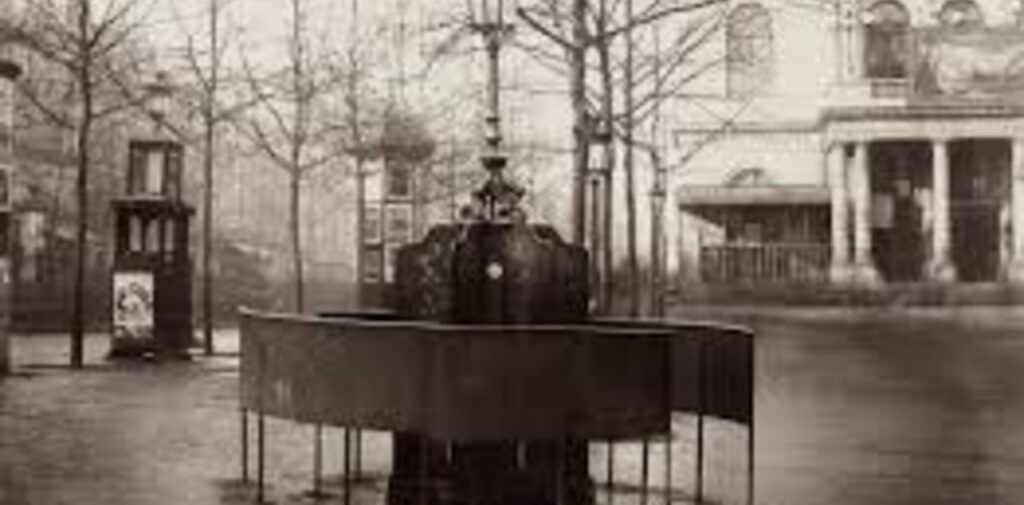
Standing behind a tin strip and looking out on the throng with that contented, easy, vacant smile, that long reminiscent pleasurable look, is a good thing. How many times have I stood thus in this smiling gracious world, the sun splashing over me and the birds twittering crazily, …, I seem to recall every urinal I ever stepped into. To relieve a full bladder is one of the great human joys.
Henry Miller on urinals in Paris. nb. Buenos Aires is called the ‘Paris of the south’.
If you’ve walked the streets of Buenos Aires, you’ve likely noticed two things: the beautiful architecture and the unsettling lack of public restrooms. From the historic Costanera Sur to the bustling parks of Palermo, the city suffers from a sanitation crisis that leaves locals and tourists alike confused and frustrated. Here is the story of how a city of 3 million ended up with almost nowhere to go.
The Golden Age
From the 1920s to the 1980s, the city had dozens of high-quality, “free”, underground public toilets (similar to the Parisian sanisettes) in major squares like Plaza Lorea and Plaza Constitución. They were attended by staff and very clean.
These toilets were gradually closed due to budget cuts, vandalism, and a shift in urban policy. The last remaining standalone public toilets were closed around 1999. The current scarcity is a result of deliberate policy choices to dismantle the public network rather than an inability to build them. With inflation soaring and the government implementing severe austerity measures (cutting public sector jobs and maintenance budgets), cleaning crews and facility repairs are often the first to be slashed.
A 1993 law forced bars to open their restrooms as a solution to the failure of the state to provide what many would call a basic service. It has effectively failed because small businesses, struggling to survive economically, cannot afford the water, paper, and cleaning staff for free public use. They lock the doors to survive, leaving citizens with no option but the street. The Resolution did not incentivize or reward private businesses with money, tax breaks, or subsidies for the imposed burden. They were simply handed them the onus in what could be called a violation of their property rights.
You won’t find a reliable map of public toilets because the city barely maintains them. There is a stark scarcity, with only about 33 public toilets in the entire city’s park system. Many are frequently closed for repairs or vandalism or reasons unknown.
One example is the massive Costanera Sur Ecological Reserve where toilets are locked behind gates and concentrated only at the main entrances, forcing visitors to walk kilometers or resort to the bushes. A toilet block across the road of the southern entry point also exists – but is never open. Parque Lezama is a prime example of neglect; the single fixed toilet near the Greek temple is often locked, leaving visitors with no options despite the park’s heavy foot traffic.
The Train Station Exception: Retiro and Constitución
While parks are barren, the city’s two major train hubs offer some comfort —though with caveats. The massive Retiro Mitre/Belgrano/Sarmiento complex (and the adjacent Bus Terminal) features “free”, accessible public toilets. These are generally located in the main concourses or near the ticket halls and are open to all travelers without needing a ticket. They are a reliable sanctuary in the neighborhood. A warning though; deviants also frequent the area. This of course is a problem for many public-run toilets world wide.
Following a major renovation, Constitución now boasts high-quality, hotel-like restrooms. However, access is split: The “Premium” Toilets: The pristine facilities in the basement (subsuelo) are restricted to passengers only. You must tap your SUBE card at a turnstile to enter, proving you are a train user. The Public Option: There are free, public toilets on the ground floor (near the intersection of Av. Brasil and Hornos) that do not require a SUBE card. However, these are often overcrowded and harder to find than the restricted ones.
The Human Cost
The result of this bureaucratic inertia is visible on every corner. Public Urination is a big issue. Pedestrians in Buenos Aires have to be careful as the footpaths are notorious for being covered with dog poop. Argentinians love their dogs, but not all residents clean up after them. Unfortunately it is not the only mess to avoid. With no accessible options, public urination and worse —particularly on garbage bins and in parks—has become rampant. This is not cultural acceptance but desperation. Locals are frustrated and angry. Complaints to the Ombudsman are frequent, and the “smell of urine” has become a central political issue, yet meaningful change remains stalled at present.
Normalization of Decay
It is a bleak situation. What looks like a case of Porteños “putting up” with the state of affairs, from an outsiders perspective is actually learned helplessness. When citizens report issues via the 147 hotline and see no change, or when they see toilets in historic parks locked up while the streets remain soiled, they stop expecting the state to provide basic sanitation.
The New Strategy: Privatization
Rather than rebuilding the public network, the city (as of 2026) is moving towards privatization. The government recently launched tenders to concession 16 major parks to private companies for up to 30 years. The Condition is that private operators must build and maintain public toilets as part of their deal to run cafes and kiosks. While this potentially brings “world-class” facilities without taxpayer cost, Leftist critics argue it effectively privatizes a basic human right, tying access to the operating hours and whims of a business rather than treating it as essential public infrastructure. The counter is that genuine rights don’t impose duties on others—forcing a business owner to provide service under threat of state violence is compelled service, a form of conscription.
Solutions
One solution would be that of the México experience. Public areas such as parks generally have adjacent to them privately run toilet blocks that are well cared for and only cost a few pesos.
There are bureaucratic hurdles and possible cultural issues here for this model however. Obtaining a commercial license for a standalone “toilet business” in Buenos Aires is complex. Culturally, Porteños are accustomed to free (but in reality mythical) access, via the 1993 law and may strongly resist paying for toilets that they see the state as giving them a right to use. An unfortunate culture of expectation diverged from reality. Paying for toilets may feel less like a practical fix and more like accepting that the state has failed to uphold a perceived right they are entitled to.
There is a big eating out culture and many Porteños have good relations with their local cafés. Owners are happy to accommodate regulars, returning customers, in their time of need. For regulars at their local café, there is seemingly no issue—but that doesn’t help visitors, tourists, or anyone outside their neighborhood network. The issue of sanitation and access is still a problem beyond this circumstance.
Another solution could be ‘The Bryant Park Model’. New York City faced the same problem—until one park proved otherwise. Bryant Park, in the heart of Manhattan, was once crime-ridden and avoided. In 1980, a private manager persuaded the city to let him run it. The result: 12 million visitors annually, zero cost to taxpayers, and public toilets cleaned 30 times a day.
The model works through business improvement districts—nearby businesses fund the park in exchange for increased foot traffic and property values. The private operator can innovate: classical music in bathrooms, unarmed “ambassadors” instead of police, and constant activities (free ice skating, yoga, movies) to ensure the park is filled with people, which deters crime and ensures the parks attractiveness.
Critically, the toilets are free, staffed, and pristine—because the operator’s revenue depends on people wanting to return. This contrasts sharply with government-run alternatives: one nearby Parks Department toilet cost $2 million to build, is already missing a sink, and has no attendant.
For Buenos Aires, this suggests the state’s park concession model could work—if private operators are given genuine control, not just cafe permits. As Bryant Park demonstrates, free access and private management are compatible when the incentives align. So why not go further? Give private business not only management and control of the toilets, but full ownership of the parks themselves. This will incentivise the provision of good sanitary facilities.
Until Buenos Aires chooses an effective model—Mexican paid toilets, a Bryant Park of privatization, or some other voluntary arrangement—the great toilet desert of the grand city of Buenos Aires remains.